Category Archives: The Melanesian Way

Decolonize your mind

A decolonized mind defends its cultural roots, By Isaac Giron

The term “decolonized” is popular among activists of color, yet is very loaded and hard to pin down. It has been used to free minds, but it also has divided communities.

I used to view the world in terms of opposing powers struggling for dominance. I thought I was proud of who I was, but now I see that all the Brown Power talk regurgitated the White Power history I bought into. Pride in our people shouldn’t stem from the fact that we used to be a great empire before the white man came, but from the fact that we stand as a great empire regardless of that conquest. Aware of the injustices our ancestors faced, I reciprocated that anger towards white European Americans. But the process of “decolonization” should not place colonization as the central point of our culture, nor should it romanticize our indigenous past. These trains of thought perpetuate the point of view of the dominant culture of today. Rather, “decolonization” should be a process of changing the way we view the world.

Frantz Fanon wrote,  “Imperialism leaves behind germs of rot which we must clinically detect and remove from our land and from our minds as well.”

Separating an individual from their culture and family was the tactic used by the conquistadors to subjugate a whole continent and to enslave parts of another. Many lingering affects of colonization impact our communities today. For example, people who deny their heritage or who take on the dominant culture while they reject imperialism embody these effects. Such individuals are those who went against the interests of their own community by promoting a bill that sanctioned racial profiling even though it would affect them negatively. Another example are Chicano activists who rigidly define what it means to be a Chicano. Sometimes in our urge to break free from mental colonization, we become ensnared in the same thought processes of the people we despise. An example of this are the cultural nationalists. Huey Newton, co-founder of the Black Panther Party said that “cultural nationalists are concerned with returning to the old African culture and thereby regaining their identity and freedom. In other words, they feel that the African culture will automatically bring political freedom.”

Cultural symbols do not decolonize our minds. Wearing olmec jewelry and sporting native tattoos does not mean your are decolonized.

The residue of colonization allows for the continued stratification of people. Rejecting labels, selfishness, egotism, a black and white binary, discrimination and judgments are, instead, traits of the decolonized.

A decolonized mind defends culture by defending the root of who we are. The family unit is the center of our culture. That’s why the destruction of family has been the mainstay of oppression. Even today, the separation of families is still the number one way of colonizing our community, exemplified by the anti-immigration fervor favoring deportations and incarceration. The high prison rate in black and brown communities also showcases this. Division of the ethnic family unit is the tool of choice for the colonization of our people and men of color must especially strive against these forces to be the defenders of the family.

A person with a decolonized mind accepts their past, loves their present and creates their future, regardless of what stands in their way.

Source: http://web.utah.edu/ 

Aid in reverse: how poor countries develop rich countries

New research shows that developing countries send trillions of dollars more to the west than the other way around. Why?

e have long been told a compelling story about the relationship between rich countries and poor countries. The story holds that the rich nations of the OECD give generously of their wealth to the poorer nations of the global south, to help them eradicate poverty and push them up the development ladder. Yes, during colonialism western powers may have enriched themselves by extracting resources and slave labour from their colonies – but that’s all in the past. These days, they give more than $125bn (£102bn) in aid each year – solid evidence of their benevolent goodwill.

This story is so widely propagated by the aid industry and the governments of the rich world that we have come to take it for granted. But it may not be as simple as it appears.

The US-based Global Financial Integrity (GFI) and the Centre for Applied Research at the Norwegian School of Economics recently published some fascinating data. They tallied up all of the financial resources that get transferred between rich countries and poor countries each year: not just aid, foreign investment and trade flows (as previous studies have done) but also non-financial transfers such as debt cancellation, unrequited transfers like workers’ remittances, and unrecorded capital flight (more of this later). As far as I am aware, it is the most comprehensive assessment of resource transfers ever undertaken.

What they discovered is that the flow of money from rich countries to poor countries pales in comparison to the flow that runs in the other direction.

In 2012, the last year of recorded data, developing countries received a total of $1.3tn, including all aid, investment, and income from abroad. But that same year some $3.3tn flowed out of them. In other words, developing countries sent $2tn more to the rest of the world than they received. If we look at all years since 1980, these net outflows add up to an eye-popping total of $16.3tn – that’s how much money has been drained out of the global south over the past few decades. To get a sense for the scale of this, $16.3tn is roughly the GDP of the United States

What this means is that the usual development narrative has it backwards. Aid is effectively flowing in reverse. Rich countries aren’t developing poor countries; poor countries are developing rich ones.

What do these large outflows consist of? Well, some of it is payments on debt. Developing countries have forked out over $4.2tn in interest payments alone since 1980 – a direct cash transfer to big banks in New York and London, on a scale that dwarfs the aid that they received during the same period. Another big contributor is the income that foreigners make on their investments in developing countries and then repatriate back home. Think of all the profits that BP extracts from Nigeria’s oil reserves, for example, or that Anglo-American pulls out of South Africa’s gold mines.

Most of these unrecorded outflows take place through the international trade system. Basically, corporations – foreign and domestic alike – report false prices on their trade invoices in order to spirit money out of developing countries directly into tax havens and secrecy jurisdictions, a practice known as “trade misinvoicing”. Usually the goal is to evade taxes, but sometimes this practice is used to launder money or circumvent capital controls. In 2012, developing countries lost $700bn through trade misinvoicing, which outstripped aid receipts that year by a factor of five.

GFI doesn’t include same-invoice faking in its headline figures because it is very difficult to detect, but they estimate that it amounts to another $700bn per year. And these figures only cover theft through trade in goods. If we add theft through trade in services to the mix, it brings total net resource outflows to about $3tn per year.

That’s 24 times more than the aid budget. In other words, for every $1 of aid that developing countries receive, they lose $24 in net outflows. These outflows strip developing countries of an important source of revenue and finance for development. The GFI report finds that increasingly large net outflows have caused economic growth rates in developing countries to decline, and are directly responsible for falling living standards.

Who is to blame for this disaster? Since illegal capital flight is such a big chunk of the problem, that’s a good place to start. Companies that lie on their trade invoices are clearly at fault; but why is it so easy for them to get away with it? In the past, customs officials could hold up transactions that looked dodgy, making it nearly impossible for anyone to cheat. But the World Trade Organisation claimed that this made trade inefficient, and since 1994 customs officials have been required to accept invoiced prices at face value except in very suspicious circumstances, making it difficult for them to seize illicit outflows.

Still, illegal capital flight wouldn’t be possible without the tax havens. And when it comes to tax havens, the culprits are not hard to identify: there are more than 60 in the world, and the vast majority of them are controlled by a handful of western countries. There are European tax havens such as Luxembourg and Belgium, and US tax havens like Delaware and Manhattan. But by far the biggest network of tax havens is centered around the City of London, which controls secrecy jurisdictions throughout the British Crown Dependencies and Overseas Territories.

In other words, some of the very countries that so love to tout their foreign aid contributions are the ones enabling mass theft from developing countries.

The aid narrative begins to seem a bit naïve when we take these reverse flows into account. It becomes clear that aid does little but mask the maldistribution of resources around the world. It makes the takers seem like givers, granting them a kind of moral high ground while preventing those of us who care about global poverty from understanding how the system really works.

Poor countries don’t need charity. They need justice. And justice is not difficult to deliver. We could write off the excess debts of poor countries, freeing them up to spend their money on development instead of interest payments on old loans; we could close down the secrecy jurisdictions, and slap penalties on bankers and accountants who facilitate illicit outflows; and we could impose a global minimum tax on corporate income to eliminate the incentive for corporations to secretly shift their money around the world.

We know how to fix the problem. But doing so would run up against the interests of powerful banks and corporations that extract significant material benefit from the existing system. The question is, do we have the courage?

Join our community of development professionals and humanitarians. Follow @GuardianGDP on Twitter.

Source: https://www.theguardian.com/

For Pacific Island States, Climate Change Is an Existential Threat

 By Grant Wyeth

The decision by President Donald Trump to withdraw the United States from the Paris Agreement on Climate Change has caused much concern across the Pacific. Pacific Island states are some of the most vocal advocates for aggressive carbon reduction targets, and the Paris Agreement had been welcomed at the time of its creation by Pacific Island states.

For many Pacific Island states, the current forecasts for rising sea levels due to climate change will severely impact their territory. For island states such a Tuvalu, Kiribati, and the Marshall Islands, rising sea levels are a genuine and immediate existential threat. These island states exist on territory that rises only a few meters above sea level, at best. This means that any rise in the sea level, no matter how incremental, eats into their very limited landmass. The current predicted sea level rise of 2 meters by 2100 would mean an almost total submersion for these three states.

Other Pacific Island states will also be greatly affected. Five low-lying islands within the Solomon Island archipelago have already been submerged. Changes in both geographic features and water temperatures also have the potential to alter the fishing stocks that Pacific Islands states rely on for food security.

Tuvalu’s Prime Minister Enele Sopoaga was so concerned by Trump’s decision that he ordered his country’s officials to cancel any cooperation with the United States until Washington has a new climate change policy in place. In regards to Trump’s decision, Sopoaga stated: “I think it doesn’t make any sense to talk about any other thing if we don’t fix the problem of climate change… We are very, very distressed, I think this a very destructive, obstructive statement from a leader of perhaps the biggest polluter on earth and we are very disappointed as a small island country already suffering the effects of climate change.”The global, stateless, nature of the climate change phenomenon is keenly understood by Pacific Islands. With little capacity to stem this threat to their existence themselves, these countries rely on the big players to instigate reforms that might prevent more drastic warming of the Earth’s atmosphere, oceans and surfaces.

For Fiji’s Prime Minister Frank Bainimarama, a man who has set himself up as the global champion of the interests of Pacific Island states, the decision was disappointing, but he remained hopeful international cooperation could still result, stating: “I did what I could — along with many leaders around the world — to try to persuade President Trump to remain standing shoulder-to-shoulder with us as we tackled the greatest challenge our planet has ever faced. While the loss of America’s leadership is unfortunate, this a struggle that is far from over.”

Trump’s decision came right before Fiji assumes the presidency of Conference of the Parties (COP), the annual forum for countries that signed up to the 1992 United Nations Framework Convention on Climate Change. The forum will be held in Bonn, Germany from November 6-17 this year.

Fiji’s presidency is a historic event, as it is the first Small Island Developing State to hold the presidency. Fiji’s presidency was designed to highlight the problems that climate change is producing for Pacific Island states — not just rising sea levels, but more intense weather events causing severe destruction, like Cyclone Winston last year, which caused damage valued at 10 percent of the country’s GDP.

In his speech to the UN Climate Change Conference in May (a precursor to the COP23 forum in November), Bainimarama reaffirmed Fiji’s commitment to the goals and the implementation of the Paris Agreement. He outlined his vision that Fiji’s presidency of the COP would have the interests of small island states at its core, wishing to build a coalition of partners to help these states build greater resilience against rising sea levels and extreme weather events. Trump’s decision to withdraw from the Paris Agreement severely undermines Bainimarama’s position, and Fiji’s prominent role in a major multilateral forum.

While Pacific Island leaders have been disappointed with Trump’s decision, that other major powers have reaffirmed their commitment to the Paris agreement will give them some solace. The recent India-Pacific Islands Sustainable Development Conference held in Suva, Fiji, is an indication that other significant powers have an understanding of the situation that Pacific Island states are in. The hope will be that the recalcitrance of the world’s major power will only be temporary, and a future administration will reaffirm its commitment to the Paris goals.

Source: https://thediplomat.com/ 

‘Small and Far’: Pacific Island States Gather at Annual Forum

The 16 states are meeting this week to discuss regional challenges, particularly climate change.

The forum describes its mission as: “to work in support of forum member governments, to enhance the economic and social well-being of the people of the South Pacific by fostering cooperation between governments and between international agencies, and by representing the interests of forum members in ways agreed by the forum.” It has met annually since 1971, when the forum was founded as the South Pacific Forum.

Sixteen states in the South Pacific are members of the Pacific Islands Forum: Australia, Cook Islands, Federated States of Micronesia, Fiji, Kiribati, Nauru, New Zealand, Niue, Palau, Papua New Guinea, Republic of Marshall Islands, Samoa, Solomon Islands, Tonga, Tuvalu, and Vanuatu.

Reflecting the predominant geographic nature of the forum’s members, the theme for this year’s summit is: “Small and Far: Challenges for Growth.” While each of the members have small land masses and populations (Australia aside), their combined sovereignty covers an area of 8,538,293 sq km (3,296,653 sq mi), making their agreement over maritime concerns important not only for members of the forum, but also for states outside the forum with interests in the South Pacific.This geographic reality is usually reflected in the priority of regional fisheries and shipping lanes on the forum’s agenda. However, in recent years the impact of climate change has begun to dominate discussions within the forum.

The smaller states within the South Pacific have become a leading voice on the global stage on the issue of climate change and its potential effects on human security, as well as the environment. Pacific Island nations take climate change extremely seriously, with some forecasts predicting a potential loss of territory due to rising sea levels. For Tuvalu, a country whose highest point is only 4 meters above sea level, rising sea levels are very real threat to its existence.

This puts them at great odds with the region’s main power. Low-lying Pacific Islands deem Australia’s continued reliance on coal, as both a source of energy and a major export, a menace. Australia remains the third largest producer of coal in the world (behind China and the United States), and the world’s largest exporter of the fossil fuel, with no intention of shifting these positions.

The most prominent external issue for the forum will remain its interest in the Indonesian province of West Papua. In June this year the Solomon Islands and Vanuatu informed the United Nations Human Rights Council in Geneva that they were very concerned about the deteriorating human rights situation in West Papua. While representatives from West Papua have no involvement in the forum, many of the Melanesian states like the Solomon Islands, Vanuatu, and Papua New Guinea maintain a strong ethnic solidarity with the Indonesian province, and pay special attention to developments there.

At last year’s Forum in Port Moresby a decision was reached to organize a fact finding mission to West Papua. However, Jakarta indicated it would not welcome any delegation, and had problems with the use of the term “fact-finding.” However, West Papuan leaders in exile remain hopeful that a push for similar pressure on Indonesia will develop from this year’s forum. However, with Australia keen to maintain friendly relations with Indonesia, it is doubtful Canberra will add too much of its weight to these concerns.

The other major concern for the forum will be the continued negotiations of the Pacific Agreement on Closer Economic Relations (known as PACER Plus). There is a developing consensus among the smaller Pacific Islands states that this agreement would not promote further economic development. Given that these island states already have tariff-free and duty-free access to the Australian and New Zealand markets the PACER Plus agreement would do little to enhance this reality.

Fiji’s Prime Minister, Frank Bainimarama, has stated there “aren’t enough pluses” for Fiji to warrant signing the agreement, and the PNG Trade Minister has flatly stated he is “not interested” in it.  Of greater importance to the Pacific Island states is freer labor mobility for unskilled and semi-skilled workers within the Australian and New Zealand markets. This is seen as having a far more direct positive economic impact for these countries.

The forum will conclude on Sunday September 11 with its traditional communiqué of conclusions reached to be published shortly after.

Five Pacific islands lost to rising seas as climate change hits

Six more islands have large swaths of land, and villages, washed into sea as coastline of Solomon Islands eroded and overwhelmed

Five tiny Pacific islands have disappeared due to rising seas and erosion, a discovery thought to be the first scientific confirmation of the impact of climate change on coastlines in the Pacific, according to Australian researchers.

The submerged islands were part of the Solomon Islands, an archipelago that over the last two decades has seen annual sea levels rise as much as 10mm (0.4in), according to research published in the May issue of the online journal Environmental Research Letters.

The missing islands, ranging in size from 1 to 5 hectares (2.5-12.4 acres) were not inhabited by humans.

But six other islands had large swaths of land washed into the sea and on two of those, entire villages were destroyed and people forced to relocate, the researchers found.

One was Nuatambu island, home to 25 families, which has lost 11 houses and half its inhabitable area since 2011, the research said.

The study is the first that scientifically “confirms the numerous anecdotal accounts from across the Pacific of the dramatic impacts of climate change on coastlines and people,” the researchers wrote in a separate commentary on an academic website.

The scientists used aerial and satellite images dating back to 1947 of 33 islands, as well as traditional knowledge and radiocarbon dating of trees for their findings.

The Solomon Islands, a nation made up of hundreds of islands and with a population of about 640,000, lies about 1,000 miles north-east of Australia.

The study raises questions about the role of government in relocation planning, said a Solomon Islands official.

Map of Nuatambu Island.


“This ultimately calls for support from development partners and international financial mechanisms such as the Green Climate Fund,” Melchior Mataki, head of the Solomon Islands’ National Disaster Council, was quoted as saying in the commentary.

The Green Climate Fund, part of United Nations Framework Convention on Climate Change, was founded to help countries deal with climate change.

Ad hoc relocation has occurred on the islands, the study said. Several Nuatambu islanders moved to a neighbouring, higher volcanic island, the study said. Other people were forced to move from the island of Nararo.

Sirilo Sutaroti, 94, is among those who had to relocate from Nararo. He told researchers: “The sea has started to come inland, it forced us to move up to the hilltop and rebuild our village there away from the sea.”

Source: https://www.theguardian.com/ 

Sea levels set to ‘rise far more rapidly than expected’

New research factors in collapsing Antarctic ice sheet that could double the sea-level rise to two metres by 2100 if emissions are not cut

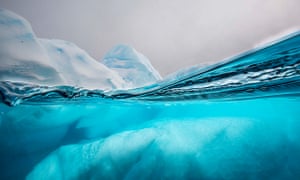
Antarctica’s snowfall was expected to keep the ice sheet in balance but it is less stable than previously thought.
Antarctica’s snowfall was expected to keep the ice sheet in balance but it is less stable than previously thought. Photograph: Steve Mandel / Barcroft Media

Sea levels could rise far more rapidly than expected in coming decades, according to new research that reveals Antarctica’s vast ice cap is less stable than previously thought.

The UN’s climate science body had predicted up to a metre of sea level rise this century – but it did not anticipate any significant contribution from Antarctica, where increasing snowfall was expected to keep the ice sheet in balance.

According a study, published in the journal Nature, collapsing Antarctic ice sheets are expected to double sea-level rise to two metres by 2100, if carbon emissions are not cut.

Previously, only the passive melting of Antarctic ice by warmer air and seawater was considered but the new work added active processes, such as the disintegration of huge ice cliffs.

“This [doubling] could spell disaster for many low-lying cities,” said Prof Robert DeConto, at the University of Massachusetts Amherst, who led the work. He said that if global warming was not halted, the rate of sea-level rise would change from millimetres per year to centimetres a year. “At that point it becomes about retreat [from cities], not engineering of defences.”

As well as rising seas, climate change is also causing storms to become fiercer, forming a highly destructive combination for low-lying cities like New York, Mumbai and Guangzhou. Many coastal cities are growing fast as populations rise and analysis by World Bank and OECD staff has shown that global flood damage could cost them $1tn a year by 2050 unless action is taken.

The cities most at risk in richer nations include Miami, Boston and Nagoya, while cities in China, Vietnam, Bangladesh and Ivory Coast are among those most in danger in less wealthy countries.

The new research follows other recent studies warning of the possibility of ice sheet collapse in Antarctica and suggesting huge sea-level rises. But the new work suggests that major rises are possible within the lifetimes of today’s children, not over centuries.

“The bad news is that in the business-as-usual, high-emissions scenario, we end up with very, very high estimates of the contribution of Antarctica to sea-level rise” by 2100, DeConto told the Guardian. But he said that if emissions were quickly slashed to zero, the rise in sea level from Antarctic ice could be reduced to almost nothing.

“This is the good news,” he said. “It is not too late and that is wonderful. But we can’t say we are 100% out of the woods.” Even if emissions are slashed, DeConto said, there remains a 10% chance that sea level will rise significantly.

Prof David Vaughan, at the British Antarctic Survey and not part of the research team, said: “The new model includes for the first time a projection of how in future, the Antarctic ice sheet may to lose ice through processes that today we only see occurring in Greenland.

“I have no doubt that on a century to millennia timescale, warming will make these processes significant in Antarctica and drive a very significant Antarctic contribution to sea level rise. The big question for me is, how soon could this all begin. I’m not sure, but these guys are definitely asking the right questions.”

Active physical processes are well-known ways of breaking up ice sheets but had not been included in complex 3D models of the Antarctic ice sheet before. The processes include water from melting on the surface of the ice sheet to flow down into crevasses and widen them further. “Meltwater can have a really deleterious effect,” said DeConto. “It’s an attack on the ice sheet from above as well as below.”

Today, he said, summer temperatures approach or just exceed freezing point around Antarctica: “It would not take much warming to see a pretty dramatic increase [in surface melting] and it would happen very quickly.”

The new models also included the loss of floating ice shelves from the coast of Antarctica, which currently hold back the ice on land. The break-up of ice shelves can also leave huge ice cliffs 1,000m high towering over the ocean, which then collapse under their own weight, pushing up sea level even further.

The scientists calibrated their model against geological records of events 125,000 years ago and 3m years ago, when the temperature was similar to today but sea level was much higher.

Sea-level rise is also driven by the expansion of water as it gets warmer and in January scientists suggested this factor had been significantly underestimated, adding further weight to concerns about future rises.

Recent temperatures have been shattering records and on Monday, it was announced that the Arctic ice cap had been reduced to its smallest winter areasince records began in 1979, although the melting of this already floating sea ice does not push up ocean levels.

Cyclone Winston Wreaks Havoc on Fiji

It was one of the South Pacific’s fiercest storms on record.

Cyclone Winston Wreaks Havoc on Fiji
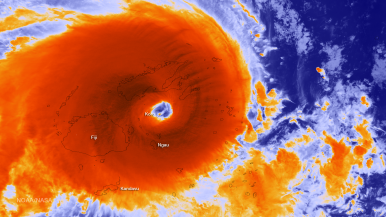
Image Credit: NOAA

Cyclone Winston, which made a direct hit on the Fijian island of Koro over the weekend, was the first Category 5 cyclone to make landfall on Fijian territory in recorded history. The latest reported numbers indicate that 42 people have died as a result of the storm, with aid agencies warning that more may die in the storm’s aftermath as the small country rushes to reach communities on remote islands.

According to the National Oceanic and Atmospheric Administration (NOAA), a U.S. agency, the storm’s winds were estimated to have reached 185 mph. Tom Di Liberto, a meteorologist with NOAA’s climate prediction center, wrote that it  “was one of the strongest storms ever recorded in the Southern Hemisphere.”

With the storm over, the recovery has begun but the task is monumental. The Fijian government declared a month-long state of emergency and put out calls for assistance. The storm did not make a direct hit on the country’s capital, Suva, but wreaked havoc on Koro and many of the country’s other islands. There are more than 330 Fijian islands, about a third of which are inhabited.

Fijian Prime Minister Frank Bainimarama gave a national address Wednesday in which he said, “Almost no part of our nation has been left unscarred.” Per the Sydney Morning Herald, Bainimarama focused attention on immediate concerns: food, water, and shelter.Cyclone Winston flattened homes, caused extensive coastal flooding and knocked out utility and communication systems. The storm also irreparably damaged sugarcane crops.

Radio New Zealand reports that New Zealand, Australia, and France have sent relief flights and the United States, China, India, and the EU have all offered financial assistance. The New Zealand Navy is dispatching the HMNZS Canterbury, a multi-role vessel,  and the HMNZS Wellington, an offshore patrol vessel, loaded with supplies to assist in recovery efforts.

Numerous aid agencies and international organizations have pledged help for Fiji. The Asian Development Bank committed to $2 million in emergency assistance. The Red Cross says it had mobilized more than 300 staff and volunteers in the islands and is releasing emergency funds to the Fiji Red Cross.

Days after the storm aid still seems sluggish for some, as Kim Baker Wilson makes clear in a report for Radio New Zealand from Rakiraki, a district on the northern edge of the island of Fiji’s main island of Vitu Levu. An estimated 1,000 homes were destroyed in Rakiraki.

And more is needed. Ewan Perrin, the newly-appointed permanent secretary for Communication and Information Technology, said that Fiji would “definitely need more international assistance.” From his comments reported by Radio New Zealand, Perrin said Fiji had “everything that we need at this stage” but that more assistance would be needed in the medium to long term.

Fiji’s economy is built on sugar and tourism, both of which are likely to take a massive hit in the storm’s wake.

Last year, Cyclone Pam made a direct hit on Vanuatu, devastating the country. In the months after the storm, Vanuatu’s political system nearly imploded with a quarter of the parliament jailed on corruption charges.

Pacific island nations–like Fiji–have led the charge on climate change globally, sounding the warning siren because their communities will be among the first affected by rising sea levels and worsening storms. Ahead of the Paris climate change talks last year, Bainimarama warned,“Unless the world acts decisively in the coming weeks to begin addressing the greatest challenge of our age, then the Pacific, as we know it, is doomed.”

Green growth, activism & Pacific regionalism – in conversation with Fe’iloakitau Kaho Tevi

Tess Newton Cain, Feiloakitau Kaho Tevi

To reboot Pacific Conversations, Tess recently met with Fei Tevi over coffee in Port Vila. You can hear a podcast of their conversation here and read a transcript here. For the highlights of what they discussed, read on…

I started by asking Fei to fill us in on his background and participation to date in development in the Pacific. Fei is now based in Vanuatu as a result of his wife Eleni’s position at the Melanesian Spearhead Group. He is working as a consultant to the governments of Solomon Islands and Vanuatu, assisting them in developing sustainable development policies and brings with him a wealth of experience in diplomacy, international relations and civil society activism and advocacy.

I am trained in diplomacy and international relations. I worked for the churches for a number of years, over a decade, both in Geneva, Switzerland and also here in the Pacific … prior to that, I was with the Pacific Concerns Resource Center, which is the secretariat to the Nuclear Free and Independent Pacific Movement. Very formative years, ’96 to 2000.

During 2015, Fei participated in the Pacific Islands Development Forum (PIDF) in Suva and was also in Port Moresby for the Pacific Islands Forum leaders’ meeting. So I was keen to find out what he thought the relative strengths and weaknesses are of those regional groupings. In relation to the Pacific Islands Forum, Fei was quick to acknowledge the leadership input of Dame Meg Taylor and said he was watching with interest to see what the further impacts of that would be. He then told me categorically that he thought the issue of West Papua would be critical for the Pacific Islands Forum in the future:

And so this is what I’m saying. The Forum itself, the issue will be a determining factor how they treat West Papua and how they are able to get the political support around the issue. And it won’t go away.

In relation to the PIDF, Fei felt that it had achieved a significant success in 2015 by providing a space for Pacific island leaders to caucus around key issues, especially a joint position for the COP 21 talks in Paris, ahead of the Forum meeting in Port Moresby:

But I think PIDF had a role to play in harnessing the collective momentum of the countries, to stand together and say, “Yes, this is what we need.” And not to be pulled apart … We had one meeting after the other, and people saying the same things and coming right through and holding their stance at the Forum, saying “This is what we want, and this is what you get.” Despite all the pressures, despite all the checkbook diplomacy, everything was up to try and get the Pacific island countries to shift and take position. And kudos to them.

And then he provided a very important statement to define the role and place of the PIDF; one that I feel has not been so clearly and explicitly articulated before now:

…we need to have clarity on what PIDF is. It’s a space. Maintaining that space is a very difficult challenge. Everybody wants to cloud that space, Fiji included. Everybody wants to get that space, monopolise that space. As long as we can keep that space as an opportunity for people to come and talk about issues or challenges, talk about opportunities, discuss deals, that will form the character of PIDF. It’s not a CROP agency. It will not deliver on water tanks and water and sanitation programs. It’s not geared towards that.

We then moved on to discuss the concept of ‘green growth’ in the Pacific context, which is an aspect of development with which Fei has been very involved in recent years. I began by asking him how he conceptualises the Pacific concept of green growth, given that it appears to be something that has yet to achieve one accepted definition globally:

In the work that we’ve been doing over the last 3-4 years, in the Pacific, green growth has to do with lifestyles; green growth has to do with a sustainable approach to development. Green growth has to do with—the maturity of the countries to determine where and how they want to address development.

He sees the Pacific conceptualisation of green growth as being one that goes beyond technological interventions. So, next, I asked Fei to give me some sense of what green growth means in a practical sense. How can it or should it influence the way Pacific island countries do business? He took as his starting point the resilience of the communities in Vanuatu further to the impacts of Cyclone Pam last year.

…that for me expresses a set of values that for me green growth encompasses … And that’s part of, I guess, a sense of maturity that we are going through. The recognition that there is something that we can learn and that the future of the region, in terms of green growth, it’s within us. We need to find the tools to identify this and to identify those components of what we can achieve. So that’s one example we can quote. Examples of which time and time again, the resilient nature of these communities has expressed itself with or without help or foreign assistance. So we need to think about that. We need to think how that defines, how that defines growth for us.

Drawing on Fei’s longstanding and extensive involvement with civil society activism in our region, I asked him how he assessed the current capacity within that sector to influence national and regional decision-making about the important issues that we face. He reflected on the changing nature of activism in the region, which he felt had been blunted as a result of becoming ‘institutionalised’ in the 1990s. However, more recently, he had seen resurgence particularly around the issues of self-determination for West Papua and climate change activism:

You have the new environmental activists that are coming through, the young Solwarans, the Young Solwara movement, the Wan Solwara movement, the other groups that have— … PICAN, Pacific Islands Climate Action Network. These are all young, new activists that are coming through.

I expressed a concern that a weakness for civil society at present in our region is a lack of access to and influence with governments. Fei was quite clear that governments in the region should do much more to include civil society in relevant discussions and policy formulation:

… I think we cannot point five of our fingers at civil society. I think there’s a lot of responsibility also that governments have to take on in terms of how they deal with civil society… there has to be a revisiting of what civil service means, and being a civil servant. You are a servant of the government, and by government means the people. So you serve the people. It’s not the other way around. The people don’t come in on their knees to come and ask for service. They shouldn’t. Citizens, rightfully, ask and request their assistance, and their service. Then I think there needs to be a give and take in this discussion.

Finally, we discussed the impact of the election of ‘Akilisi Pohiva as prime minister of Tonga and what it means for democracy in that country. He was quick to acknowledge that the early months have proved disappointing in some ways:

I think in the longer run, in the medium to long term, I think there’s a lot of benefit that can accrue from ‘Akilisi and his time, and his government being in place. I think there’s a lot of lessons that can be taken from the first year or so of ‘Akilisi’s government. A lot of questionable decisions.

He then went on to make a very interesting observation in relation to what we can expect from Tonga in terms of regional participation:

There is more good than bad—there’s more strengths than weaknesses that’s coming out of this government. The fact that, you know, Tonga has taken a strong stance on the issue of West Papua is a token of that and you will see, you will see this government taking on regional issues in a much more stronger way than in the past. The first year has been about consolidating and shifting the country at the national level. I think you will see Tonga playing a more influential role in the region in the future.

…something to look forward to, for sure.

Tess Newton Cain is a Visiting Fellow at the Development Policy Centre. Fe’iloakitau Kaho Tevi is a consultant to the governments of Solomon Islands and Vanuatu on sustainable development policies, and has experience in diplomacy, international relations and civil society activism and advocacy.
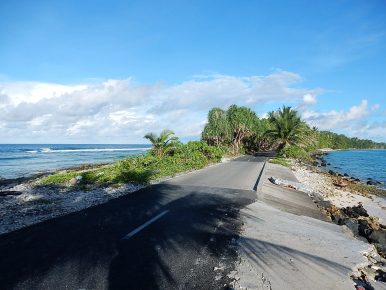
Sea-level rise ‘could last twice as long as human history’

Research warns of the long timescale of climate change impacts unless urgent action is taken to cut emissions drastically

Huge sea-level rises caused by climate change will last far longer than the entire history of human civilisation to date, according to new research, unless the brief window of opportunity of the next few decades is used to cut carbon emissions drastically.

Even if global warming is capped at governments’ target of 2C – which is already seen as difficult – 20% of the world’s population will eventually have to migrate away from coasts swamped by rising oceans. Cities including New York, London, Rio de Janeiro, Cairo, Calcutta, Jakarta and Shanghai would all be submerged.

“Much of the carbon we are putting in the air from burning fossil fuels will stay there for thousands of years,” said Prof Peter Clark, at Oregon State University in the US and who led the new work. “People need to understand that the effects of climate change won’t go away, at least not for thousands of generations.”

“The long-term view sends the chilling message of what the real risks and consequences are of the fossil fuel era,” said Prof Thomas Stocker, at the University of Bern, Switzerland and also part of the research team. “It will commit us to massive adaptation efforts so that for many, dislocation and migration becomes the only option.”

The report, published in the journal Nature Climate Change, notes most research looks at the impacts of global warming by 2100 and so misses one of the biggest consequences for civilisation – the long-term melting of polar ice caps and sea-level rise.

This is because the great ice sheets take thousand of years to react fully to higher temperatures. The researchers say this long-term view raises moral questions about the kind of environment being passed down to future generations.

The research shows that even with climate change limited to 2C by tough emissions cuts, sea level would rise by 25 metres over the next 2,000 years or so and remain there for at least 10,000 years – twice as long as human history. If today’s burning of coal, oil and gas is not curbed, the sea would rise by 50m, completely changing the map of the world.

“We can’t keep building seawalls that are 25m high,” said Clark. “Entire populations of cities will eventually have to move.”

By far the greatest contributor to the sea level rise – about 80% – would be the melting of the Antarctic ice sheet. Another new study in Nature Climate Changepublished on Monday reveals that some large Antarctic ice sheets are dangerously close to losing the sea ice shelves that hold back their flow into the ocean.

Huge floating sea ice shelves around Antarctica provide buttresses for the glaciers and ice sheets on the continent. But when they are lost to melting, as happened the with Larsen B shelf in 2002, the speed of flow into the ocean can increase eightfold.

Johannes Fürst, at the University of Erlangen-Nürnberg in Germany and colleagues, calculated that just 5% of the ice shelf in the Bellingshausen Sea and 7% in the Amundsen Sea can be lost before their buttressing effect vanishes. “This is worrying because it is in these regions that we have observed the highest rates of ice-shelf thinning over the past two decades,” he said.

Avoiding the long-term swamping of many of the world’s greatest cities is already difficult, given the amount carbon dioxide already released into the atmosphere. “Sea-level rise is already baked into the system,” said Prof Stocker, one of the world’s leading climate scientists.

However, the rise could be reduced and delayed if carbon is removed from the atmosphere in the future, he said: “If you are very optimistic and think we will be in the position by 2050 or 2070 to have a global scale carbon removal scheme – which sounds very science fiction – you could pump down CO2 levels. But there is no indication that this is technically possible.” A further difficulty is the large amount of heat and CO2 already stored in the oceans.

Prof Stocker said: “The actions of the next 30 years are absolutely crucial for putting us on a path that avoids the [worst] outcomes and ensuring, at least in the next 200 years, the impacts are limited and give us time to adapt.”

The researchers argue that a new industrial revolution is required to deliver a global energy system that emits no carbon at all. They conclude: “The success of the [UN climate summit in] Paris meeting, and of every future meeting, must be evaluated not only by levels of national commitments, but also by looking at how they will lead ultimately to the point when zero-carbon energy systems become the obvious choice for everyone.”

“We are making choices that will affect our grandchildren’s grandchildren and beyond,” said Prof Daniel Schrag, at Harvard University in the US. “We need to think carefully about the long timescales of what we are unleashing.

Collapsing Greenland glacier could raise sea levels by half a metre, say scientists

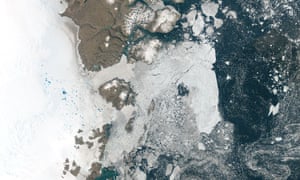
Huge Zachariae Isstrom glacier has begun to break up, starting a rapid retreat that could continue to raise sea levels for decades to come